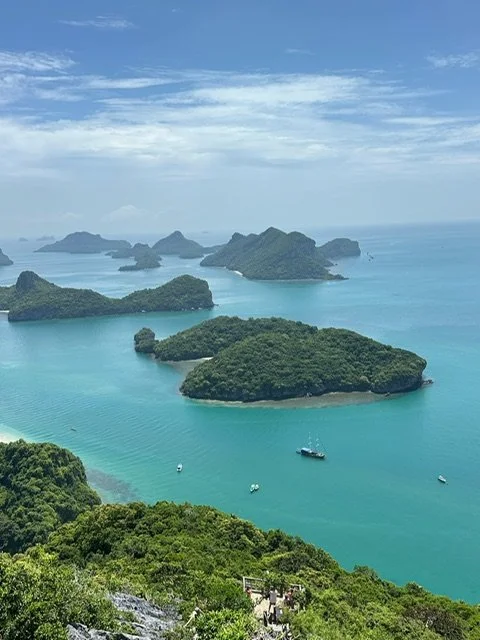
Thailand: A teen’s guide to choosing ethical wildlife experiences & responsible tourism
Why visit • Things to do • Eats • Give back • Support local • Tips • Volunteer • Support from afar • Final Thoughts

Why Visit?
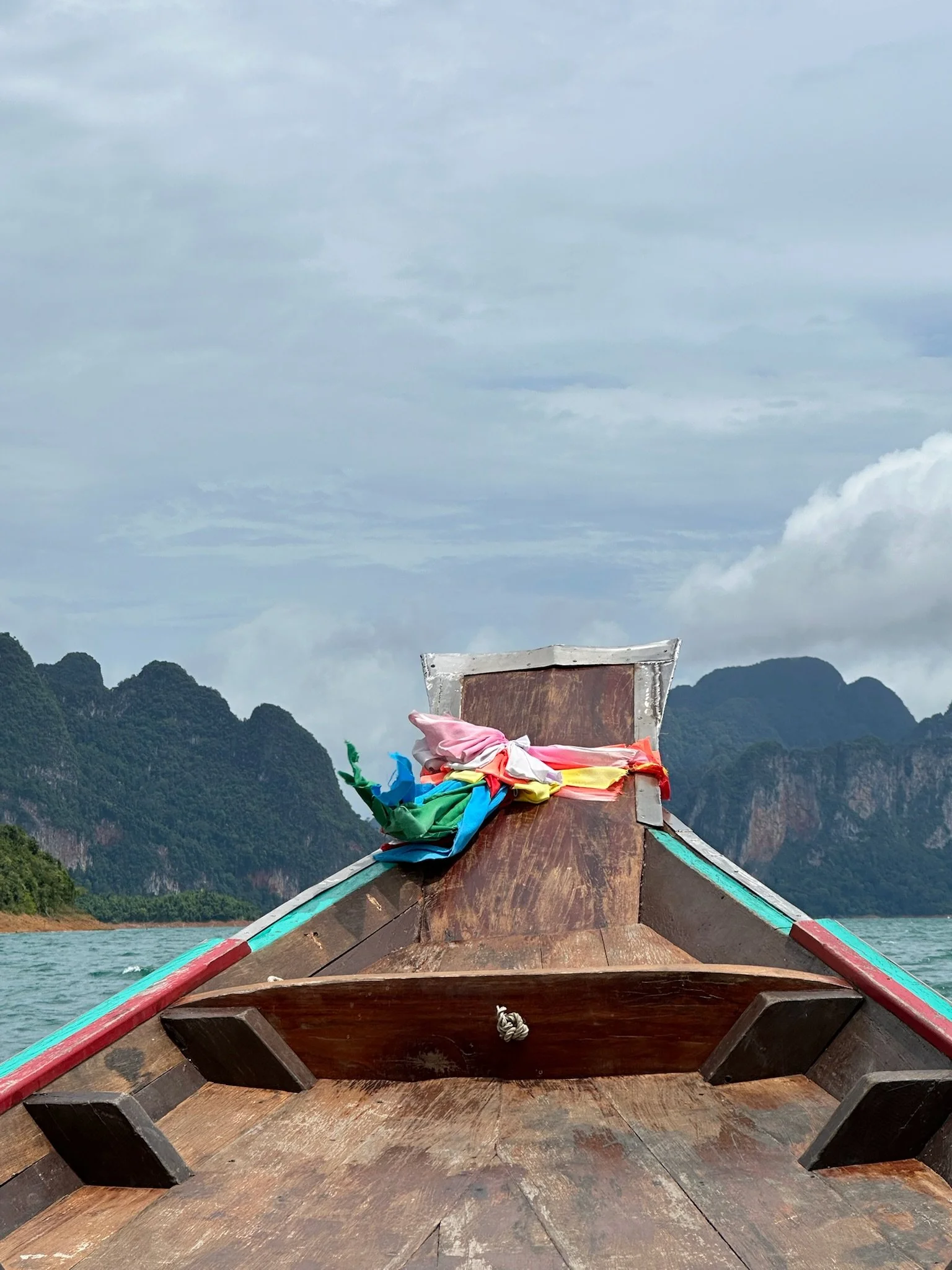
Thailand is one of those places where you can experience so many different environments in one trip. We started in Bangkok, where the city was busy, colorful, and full of temples, markets, and incredible food. From there, we traveled to Koh Phangan and Koh Samui, where the pace slowed down, and we spent more time around the beaches and the ocean. We then traveled to Surat Thani for a three-day jungle and lake safari at Elephant Hills, where we stayed in the rainforest and on Cheow Lan Lake.
What made this trip especially memorable was how different each part of Thailand felt. Bangkok showed us the energy and culture of a major city, the islands showed us Thailand’s beautiful coastline, and Elephant Hills allowed us to experience the rainforest and learn more about elephants and conservation.
Thailand is also a great example of why responsible tourism matters. Popular beaches, islands, cities, and wildlife experiences attract travelers from all over the world, which can put pressure on the environment and local communities. The Tourism Authority of Thailand has been placing more emphasis on sustainable tourism, including encouraging travelers to care for the places they visit.
As a teen traveler, I think one of the most important things is realizing that you don’t have to completely change the way you travel to make a difference. Small choices, like reducing plastic waste, supporting local businesses, respecting cultural traditions, and choosing responsible animal experiences, can make a trip more meaningful.

Top Things To Do
Thailand has so many different experiences that it can be hard to choose what to do. These were some of the highlights of our trip:
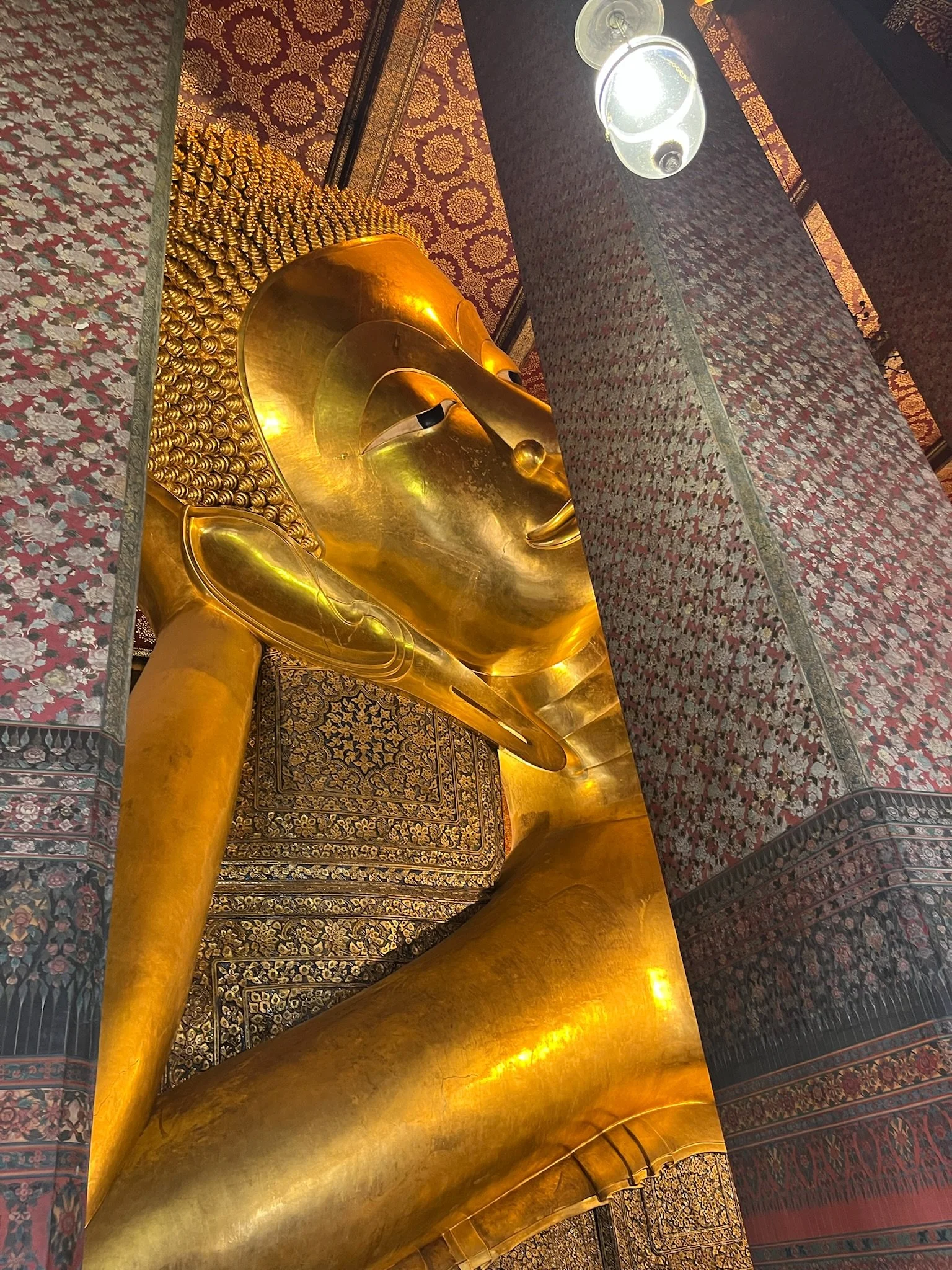
Exploring Bangkok: Visit temples, walk through markets, try new foods, and experience the energy of one of Thailand’s biggest cities. Bangkok is also a great place to explore on foot and by public transportation (or try a tuk-tuk!) instead of relying on cars for every trip.
Experience Koh Phangan: Koh Phangan is known for its beaches, but the island also has waterfalls, forests, mountains, and local communities. Spend some time exploring the natural side of the island rather than only visiting the most popular tourist areas.
Relax and explore Koh Samui: Koh Samui has beautiful beaches, local food, and plenty of outdoor activities. You can snorkel, visit the nightly markets, take a cooking class, or simply spend time enjoying the coastline.
Visit Khao Sok National Park: The rainforest around Khao Sok is one of the most biodiverse areas in Thailand. Exploring the jungle gives you a completely different experience from the beaches and cities.
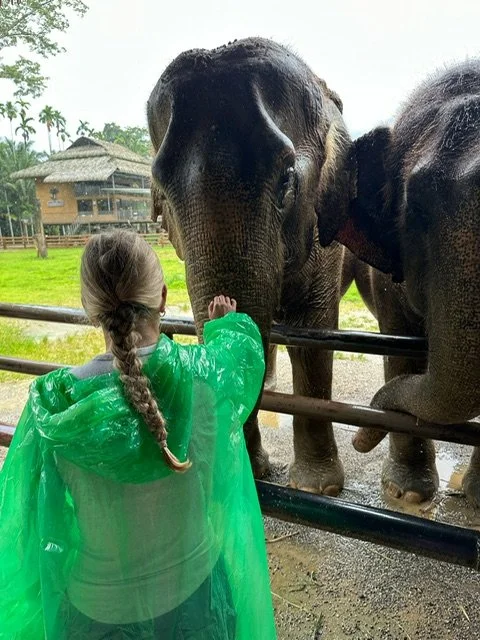
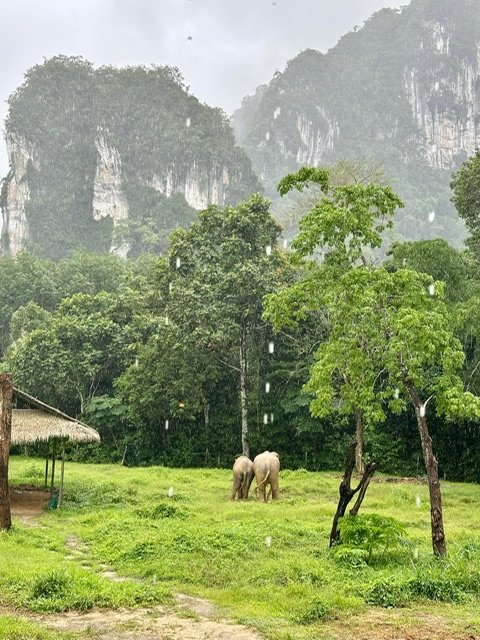
Spend time at Elephant Hills: Our three-day jungle and lake safari was one of the most memorable parts of the trip. We explored the rainforest, traveled to Cheow Lan Lake, stayed in tented camps, and had an elephant experience focused on observing and feeding the elephants rather than riding them. Elephant Hills describes its elephant experience as an ethical experience where the animals can roam freely and interact with visitors on their own terms. They have amazing programs that involve the local community, have carbon offset projects, and reduce plastic waste.
What to Eat
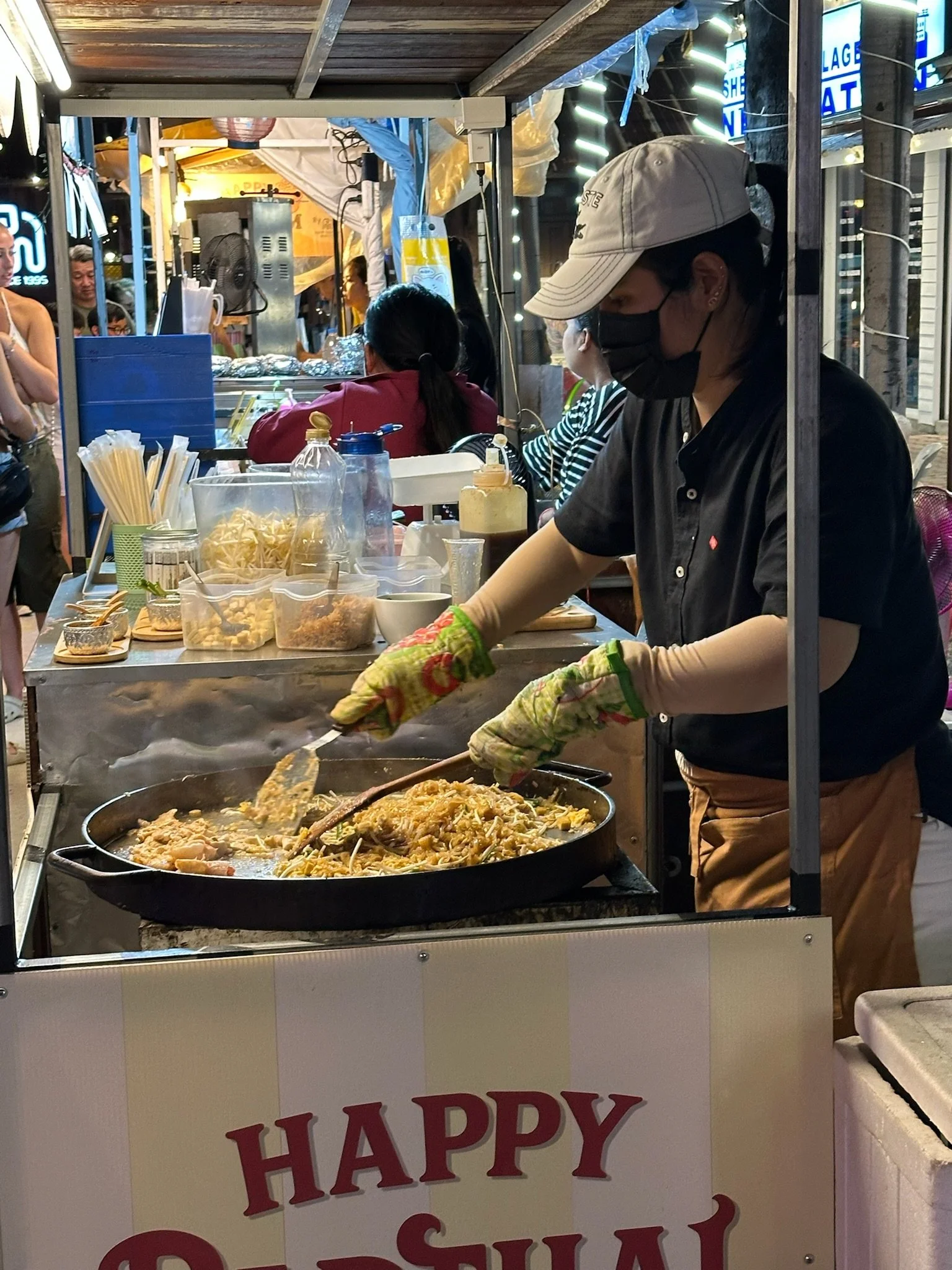
Food was one of my favorite parts of traveling through Thailand because every place seemed to have something different to try. Some foods you should look for include pad thai, mango sticky rice, green curry, tom yum soup, fresh fruit, and Thai noodles.
Bangkok is especially fun for trying street food and exploring markets. On the islands, seafood is a great choice because of their location along the coast. Wherever you are, I would recommend trying smaller local restaurants and food stands when possible. Eating somewhere locally owned gives you a chance to try more traditional food while supporting the people who live there.
And don’t be afraid to try something you’ve never had before! One of the best parts of traveling as a teen is getting outside your comfort zone and discovering foods and experiences you wouldn’t normally have at home.
Passport with Purpose Focus c
hoose ethical wildlife experiences and responsible tourism
One of the biggest lessons I took away from Thailand was that not every tourist experience involving animals is a responsible one.
Thailand is famous for elephant experiences, but there is a major difference between simply seeing an elephant and participating in an experience designed around the animals' welfare. When choosing an animal experience, travelers should look at how the animals are treated and whether the experience allows them to behave naturally.
Our experience at Elephant Hills was especially meaningful because we did not ride the elephants. Instead, we were able to observe them, help prepare their food, and watch them more around their habitat. Elephant Hills says its elephants are free to roam, socialize, eat, and spend time in their natural surroundings.
Responsible tourism also applies outside of wildlife experiences. On Koh Phangan and Koh Samui, visitors can help protect beaches and marine ecosystems by reducing plastic use, not leaving trash behind, and respecting wildlife. On hikes through the rainforest, staying on designated paths helps protect plants and habitats.
Traveling responsibly doesn’t mean your trip has to be less fun. In fact, it can make your experiences more meaningful because you know you are enjoying a place without unnecessary harm.
Local Non-Profit Spotlight
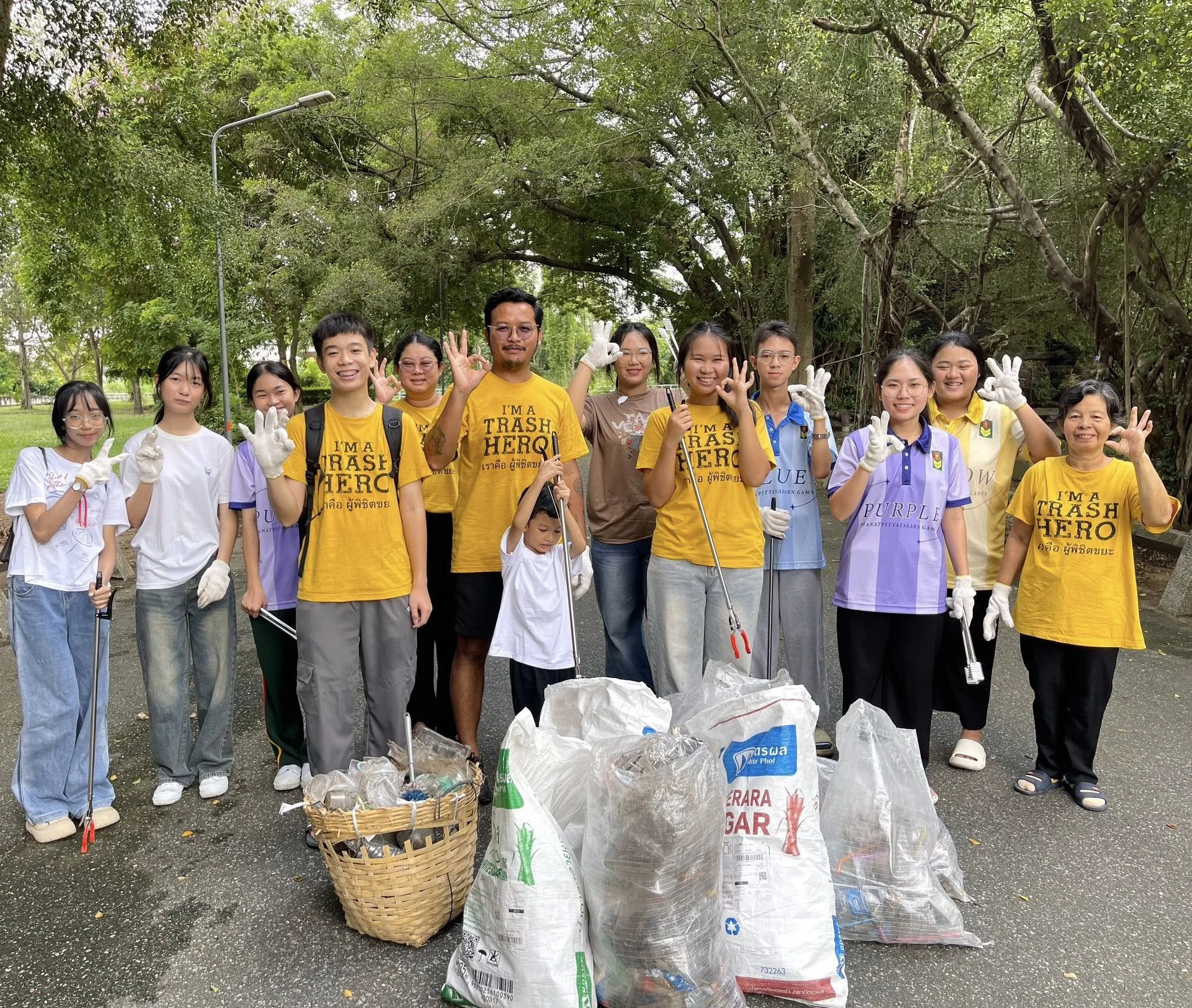
For this post, I wanted to highlight Trash Hero Thailand, a volunteer-led organization that works to reduce plastic waste and clean up beaches, islands, and communities across Thailand. What I really like about Trash Hero is that it is not just about cleaning up, it is about education and long-term change.
Trash Hero organizes regular clean-up events where both locals and travelers can join in. These events happen in places like Bangkok, Koh Samui, and other coastal areas, and they focus on removing plastic waste from beaches and public spaces. Beyond the clean-ups, they also run education programs that teach people about reducing single-use plastic and making more sustainable choices in everyday life.
One of the most powerful things about Trash Hero is that it shows how small actions can add up. Even something as simple as picking up litter for an hour or bringing your own reusable bottle can make a difference when lots of people do it together. It also made me realize that protecting a place does not always require huge projects; sometimes it starts with just showing up and helping.
I think this is a great example of how both locals and travelers can work together to protect the environment. When visitors take part in projects like this, it helps reduce the impact of tourism while also giving the visitor a deeper connection to the places they are visiting.
This also reinforced for me why it is so important to be mindful as a traveler. It is easy to forget how much waste tourism can create, especially in popular beach destinations. Organizations like Trash Hero show that there are real practical ways to help, and that even small efforts can add up to something meaningful.
Photo courtesy of Trash Hero Thailand · Used with permission

Teen Travel Tips
Bring a reusable water bottle to reduce single-use plastic.
Pack a reusable shopping bag for markets and stores.
Respect temples by dressing appropriately and following local rules (note that you must have your shoulders and knees covered out of respect when visiting temples).
Learn a few Thai words, such as Sawasdee (hello) and Khob khun (thank you).
Support local restaurants, markets, and small businesses.
Don't touch, feed, or disturb wildlife unless the activity is specifically designed to allow it responsibly.
Research animal experiences before booking them.
Take all of your trash with you when visiting beaches or natural areas.
Use public transportation or walk when possible (or take a tuk tuk), especially in Bangkok.
Be flexible and open-minded. Traveling responsibly sometimes means changing your plans to respect the environment or local community.
Remember that you are a guest in another country. Pay attention to local customs and be respectful even when something is different from what you're used to at home.
Giving Back
Volunteer opportunities
Teens aged 15-17 can volunteer at Asia's first completely chain-free elephant sanctuary and help build local school facilities.
An actual grassroots community program where teens (with their families) can teach English in rural village schools, experience cultural exchange, help with organic farming, and sports coaching (including Muay Thai) at community campuses.
Giving Back
Support local from afar
Southern Thailand Elephant Foundation (STEF)
Purchase branded t-shirts and hoodies made with sustainable materials to fund elephant vet care and conservation.
They connect rural Thai artisans—like the Karen and Hmong hill tribes—directly to global buyers. They support communities by securing steady income for family workshops, preserving traditional silver and wood crafts, and funding village infrastructure like water wells and Wi-Fi towers.
Wildlife Friends Foundation Thailand (WFFT)
They care for over 500 animals, including rescued sun bears, moon bears, gibbons, wild cats, and iguanas. You can donate to buy a basket of fresh figs, bananas, and local jungle fruits for rescued gibbons or sponsor a rescued bear’s meals of honey and insects.
Final Thoughts
Thailand was one of my favorite trips because it gave me the chance to experience so many different sides of the country. Bangkok was busy and full of energy, Koh Phangan and Koh Samui gave us beautiful beaches and island experiences, and our time at Elephant Hills allowed us to slow down and experience the rainforest and wildlife.
But one of the biggest things I took away from the trip was that how you travel matters just as much as where you travel.
As teenagers, we might not always be the one planning the entire trip or choosing every hotel and activity. Sometimes we are traveling with our families, so we do not have complete control over every decision. However, we can still make choices that have a positive impact. We can choose to support the local businesses, reduce waste, respect local culture, and learn about the organizations working to protect the places we visit.
Thailand showed me that responsible travel does not mean giving up adventure. You can explore a rainforest, kayak across a lake, visit beautiful islands, try new foods, and see incredible animals while still thinking about the impact you are having.
That is what Passport with Purpose is all about: seeing the world, experiencing new things, and finding ways to make every trip a little more meaningful.